
Optimization of staffing and nursing rostering

Nursing shift scheduling is increasingly complex: 24/7 coverage, staffing shortages, and varying demand for care make traditional models based on static rules or manual scheduling ineffective. This can generate under-coverage, unnecessary costs and organizational stress.
Through optimization models and data analysis, it is possible to align nursing coverage with actual needs, improve shift balance and reduce operating costs, while ensuring continuity of care and greater sustainability for the health care workforce.
Predictive model of emergency room admissions

In emergency rooms, where demand is variable and decisions must be made quickly, predicting the risk of hospitalization after a new admission is critical to improving efficiency and quality of care.
Through machine learning models applied to clinical and operational data from a large PS hub, the probability of hospitalization can be more accurately estimated, supporting more timely decisions and more effective resource management.
Data-driven demand reallocation in facility networks
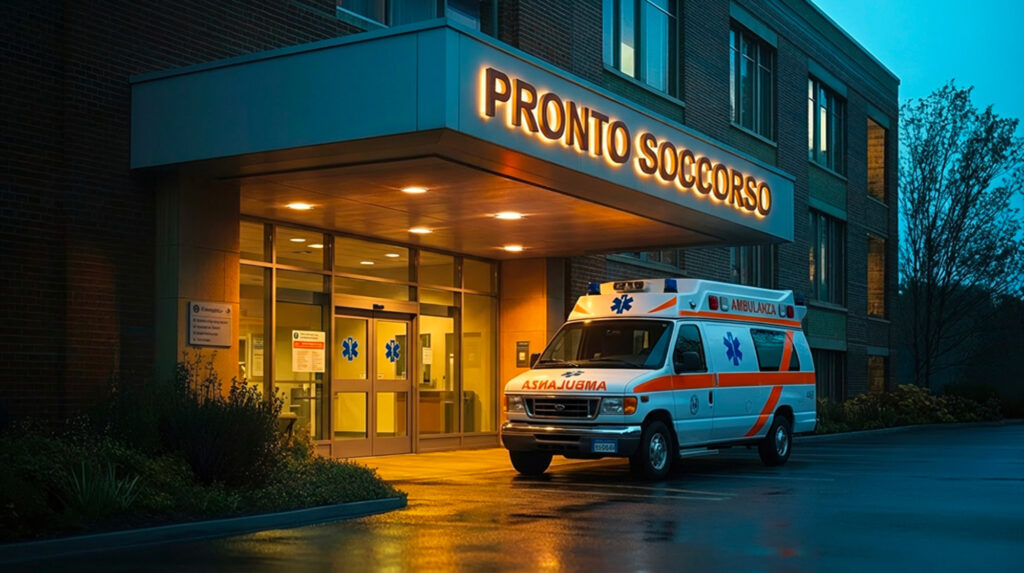
In health care systems with variable demand and limited resources, congestion in emergency rooms can grow rapidly, increasing wait times and operational inefficiencies. Strategies for centrally reallocating nonurgent patients among facilities with different levels of saturation can be adopted to deal with these peak influxes.
By applying optimization models and equity criteria in an emergency room network, the approach allows for better balancing of demand and capacity, significantly reducing waiting times, and improving the overall management of patient flows.
Vehicle Routing in Integrated Home Care

Integrated Home Care (ADI) requires complex decisions on a daily basis: assigning nurses to patients, planning visit routes, and managing means and time within clinical priorities.
An approach based on optimization models and real data allows these activities to be coordinated more efficiently, reducing travel, balancing the workload between operators, and increasing the number of possible visits for the same number of resources. The experience developed in a large ASST shows how quantitative tools can improve service organization and the quality of home care.
Prioritization in the emergency room with LLM

In emergency rooms, triage correctly classifies clinical urgency, but within the same class remain very different patients in terms of severity and care complexity. This heterogeneity can generate decision-making discretion, variability among operators, and inefficiencies in flows, especially during congestion phases.
By integrating structured data and information contained in triage texts through artificial intelligence models and prioritization algorithms, real-time operational decisions can be supported. The approach allows for improved management of intraclass priorities, reduced wait times, and more transparent and governable decision making, without replacing clinical judgment.